
Small and mid-sized businesses have increasingly turned to repurposed shipping containers for storage, workspace, and inventory management, drawn by lower upfront costs compared to traditional construction and considerably faster deployment timelines. What often gets less attention in this growing trend is a practical operational question that determines whether a container installation actually delivers on its cost and flexibility promises: how easily that container can be repositioned once it’s already in place.
Static Placement Undermines the Flexibility Businesses Actually Want
Businesses choosing containers over permanent construction often cite flexibility as a primary motivation: the ability to adjust facility layout as operations change, relocate storage as inventory patterns shift, or reposition a workspace container as a business grows into new space. This flexibility only materializes in practice if the container can actually be moved without requiring heavy equipment or specialized rigging every time an adjustment becomes necessary. A container placed directly on the ground, while simple to install initially, effectively becomes as difficult to reposition as a permanent structure, since moving it later requires the same crane or lifting equipment that positioned it in the first place. This defeats much of the practical advantage that drew a business toward container-based facilities to begin with, since the promised flexibility remains theoretical unless the business specifically plans for genuine repositioning capability from the outset.
Mobility Solutions Bridge the Gap Between Permanent and Portable
Businesses seeking genuine ongoing flexibility increasingly look toward mobility equipment that allows staff to reposition containers using standard material handling equipment already present in most facilities, rather than requiring specialized crane service for every adjustment. This approach preserves the cost and speed advantages that made containers attractive in the first place, while actually delivering the flexibility that static placement only promises in theory.
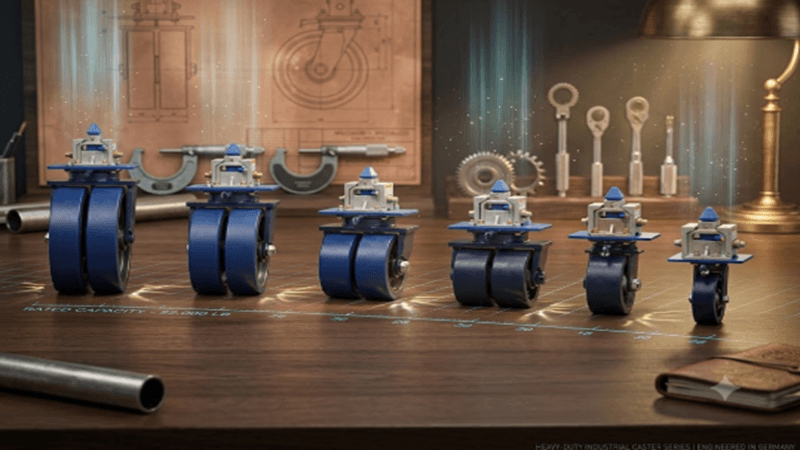
ISO container casters designed for this kind of ground-level repositioning allow a business to move a container across a facility floor or yard using standard towing equipment, converting what would otherwise require a significant equipment rental and scheduling effort into a routine internal task handled with existing resources. This distinction matters considerably for growing businesses that anticipate needing to adjust their physical footprint multiple times as operations evolve, rather than committing to a single, permanent placement decision at the time of initial container installation.
Growing Businesses Face Repositioning Needs More Often Than Expected
Business growth rarely follows a perfectly predictable path, and physical space needs often shift in ways that weren’t anticipated when an initial container placement decision was made. A storage container positioned to support one phase of operations might need repositioning as a business adds a new workflow, expands into adjacent space, or reorganizes its facility layout to accommodate increased volume or new equipment.
Businesses that anticipated this kind of change and invested in genuine repositioning capability from the start avoid the disruption and cost of treating each layout adjustment as a major project requiring outside equipment and scheduling. This foresight becomes particularly valuable for businesses in growth phases where facility needs may shift multiple times within a relatively short period, making repeated crane-dependent repositioning both expensive and operationally disruptive if genuine mobility wasn’t built into the original setup.
Seasonal and Variable Operations Benefit Considerably From Mobility
Certain business types, retail operations with seasonal inventory surges, construction companies moving between job sites, or agricultural operations with harvest-driven storage needs, experience genuinely variable space requirements throughout a given year rather than a single, static need. For these businesses, container mobility isn’t simply a convenience but a genuine operational requirement, since inflexible, permanently positioned storage would fail to serve needs that fluctuate predictably across a business’s operating calendar.
Businesses in these variable-demand categories that invest in mobility-capable container setups can reposition storage capacity to match actual seasonal or project-based demand, rather than either overbuilding permanent capacity to handle peak periods or accepting inadequate capacity during those same peak periods because repositioning existing containers would be too costly or slow to execute when actually needed.
Facility Layout Changes Become Routine Rather Than Disruptive
Beyond growth and seasonal variation, businesses regularly discover that an initial facility layout, however carefully planned, doesn’t perform as expected once actual daily operations reveal traffic patterns, workflow bottlenecks, or storage access issues that weren’t obvious during initial planning. Adjusting container placement in response to these real-world operational discoveries represents a normal, healthy part of facility optimization, but only if that adjustment doesn’t require the same significant cost and scheduling burden as an entirely new installation.
Businesses that build genuine repositioning capability into their container-based facilities from the start treat these layout adjustments as routine operational improvements rather than major disruptions requiring significant additional investment each time a change becomes necessary. This ability to make routine adjustments provides a significant, though often overlooked, operational advantage over facilities that commit businesses to fixed layout decisions made before actual usage patterns are fully understood.
Cost Comparison Requires Looking Beyond Initial Installation
Businesses evaluating container-based facilities against traditional construction alternatives sometimes focus their cost comparison primarily on initial installation expense, without adequately accounting for the ongoing cost of adjusting that facility over its actual operating lifetime. A genuinely fair cost comparison needs to account for how much future flexibility actually costs to achieve, since a container facility requiring expensive crane service for every future adjustment may prove considerably more costly over several years than one built with genuine repositioning capability from the outset, even if the two options carried similar initial installation costs. This longer-term cost perspective matters particularly for businesses anticipating genuine operational change over the coming years, since underinvesting in mobility capability at the outset often becomes a more expensive decision in aggregate than the modest additional upfront investment that genuine repositioning capability typically requires.
Planning for Change Produces Better Long-Term Outcomes
Businesses that approach container-based facilities with genuine anticipation of future change, rather than assuming their initial placement decision will remain optimal indefinitely, tend to achieve better long-term outcomes from their container investments. This forward-looking approach requires evaluating mobility capability alongside more commonly considered factors like size, location, and initial installation cost, recognizing that a facility’s ability to adapt to future needs often matters as much as how well it serves its initial, current purpose.